
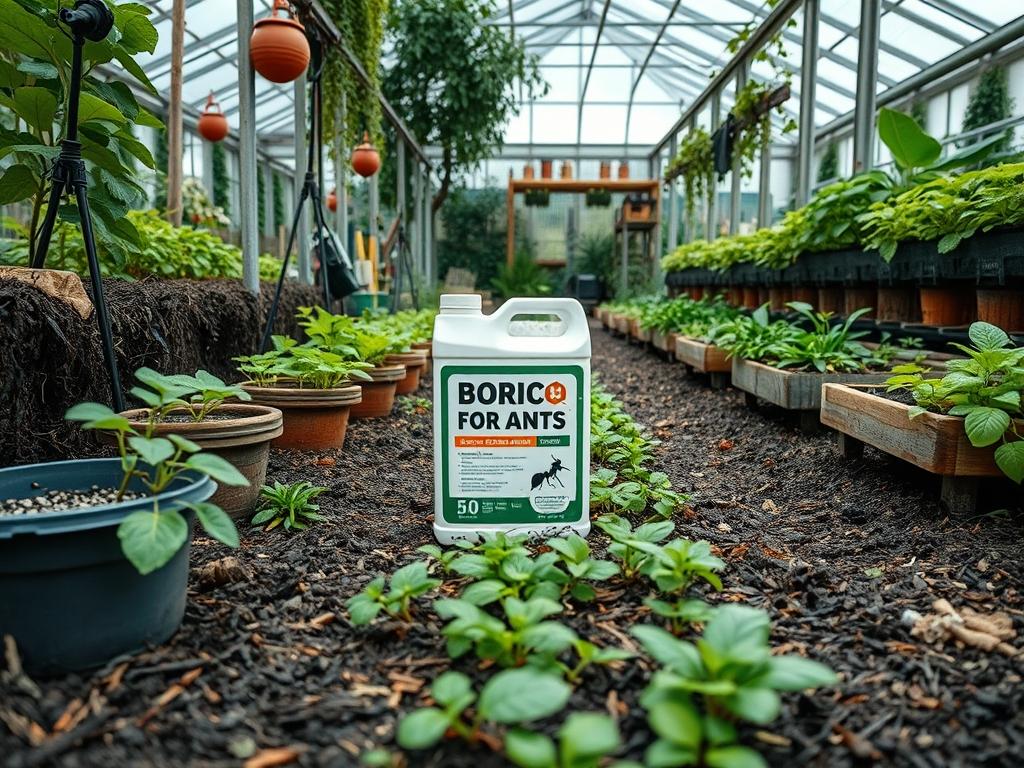
Maintaining the architectural integrity of a professional landscape requires more than just high-quality flora and seasonal pruning. It demands a rigorous understanding of the subterranean environment, where small disruptions can lead to significant structural issues over time. Curb appeal is often compromised not by the plants themselves, but by the secondary effects of pest infestations that destabilize soil and harm root systems. When homeowners or contractors encounter large-scale infestations, the use of Boric Acid for Ants becomes a strategic necessity. Ants moving through the root zones of Boxwood hedges or under Paver walkways can create voids that lead to uneven surfaces and drainage failures. Integrating a safety-first approach to pest management ensures that the outdoor living space remains both beautiful and functionally sound for years to come.
Landscape architects prioritize a balance between aesthetics and ecological health. When an ant colony establishes itself near a Retaining Wall, the constant tunneling can displace the Backfill material, eventually causing the wall to lean or settle unevenly. This movement disrupts the visual symmetry of the garden and creates a safety hazard. Furthermore, certain ant species cultivate aphids on ornamental plants like Roses or Crepe Myrtles, leading to secondary infections that diminish the plant’s vigor. By managing these pests with targeted applications of Boric Acid, a professional can protect the long-term investment made in the hardscaping and softscaping of the property. The goal is to apply treatments that are effective yet discreet, preserving the clean lines and formal structure of the garden design without introducing harsh, broad-spectrum chemicals that might damage the local ecosystem.
Landscape Design Principles
Successful garden planning relies on foundational principles such as focal points and elevation layers. When designing a new space, one must consider how water moves across the site. Poorly planned Irrigation Systems often create localized damp spots that attract carpenter ants or fire ants. To avoid this, a professional layout should include a Swale or a French Drain to move water away from high-traffic zones. Visual balance is achieved by placing larger Specimen Trees as anchors and using smaller Perennials to fill the mid-ground. If ants are allowed to thrive in the root ball of a newly planted Oak Tree, they can interfere with moisture absorption, causing the tree to tilt or fail.
Elevation layers allow for a sense of depth and discovery in the backyard. Using Natural Stone Stepping Stones provides a stable walkway, but these stones can also serve as heat sinks that attract ant colonies. When installing these features, a layer of Landscape Fabric and Crushed Stone should be placed beneath. Applying a light dusting of Boric Acid for Ants within the sub-base of the walkway before the top stones are set can act as a preventative barrier. This ensures that the primary focal point of the garden remains level and free of unsightly ant mounds that break the clean horizontal lines of the path.
Plant and Material Selection
The following table outlines plants that are commonly used in professional landscaping for their durability and visual impact. Selection should be based on the specific microclimate of the site to ensure maximum longevity and minimal pest pressure.
| Plant Type | Sun Exposure | Soil Needs | Water Demand | Growth Speed | Maintenance Level |
| :— | :— | :— | :— | :— | :— |
| English Lavender | Full Sun | Sandy, Well-Drained | Low | Moderate | Low |
| Japanese Maple | Partial Shade | Loamy, Acidic | Medium | Slow | Moderate |
| Dwarf Boxwood | Full Sun to Shade | Well-Drained | Medium | Slow | High |
| Ornamental Grass | Full Sun | Varied | Low | Fast | Low |
| Hydrangea | Partial Sun | Moist, Rich | High | Moderate | Moderate |
| Creeping Thyme | Full Sun | Poor, Rocky | Low | Moderate | Low |
When selecting materials like Cedar Mulch or Decomposed Granite, it is vital to acknowledge how they interact with the soil pH. Boric Acid is relatively neutral but should not be used in excessive quantities around acid-loving plants like Azaleas. Instead, use bait stations placed near the Foundations of the home or at the edges of Raised Garden Beds. This keeps the active ingredient contained while still providing effective control.
Implementation Strategy
Implementing a professional-grade garden layout begins with site preparation and grading. A proper slope of 2 percent away from any structures is the industry standard for preventing water accumulation. Once the grade is established, use a Spade to cut clean edges for the garden beds. This creates a physical transition between the turf and the planting areas. Before laying down 3 inches of Hardwood Mulch, inspect the area for existing pest activity. If large colonies are present, create a solution using 1 teaspoon of Boric Acid mixed with 1 cup of sugar water. This bait should be placed in child-proof and pet-proof containers near the ant trails.
Drainage is the next priority. Install a Perforated Pipe wrapped in a Silt Sock for any low-lying areas. This prevents the soil from becoming anaerobic, which can stress plants and make them more susceptible to insect damage. For hardscaping like a Paver Patio, use a Plate Compactor to ensure the Polymeric Sand is fully settled in the joints. If you are using Boric Acid for Ants as a perimeter treatment, apply it in a thin line along the outside of the Edging material. Avoid heavy piles of the powder; a fine dust is more effective as the insects carry it back to the hive without realizing it is a toxicant.
Common Landscaping Failures
One of the most frequent mistakes in professional landscaping is over-mulching. While mulch is excellent for moisture retention, a layer deeper than 4 inches can suffocate plant roots and create a perfect habitat for pests. This moisture trap allows ants to build massive networks that are difficult to reach with surface treatments. Proper spacing is another common point of failure. When Hedges are planted too close together, airflow is restricted, leading to fungal growth and increased insect pressure. Always follow the mature width guidelines for every Shrub or Tree to ensure they have the room to breathe.
Irrigation inefficiency can also lead to significant problems. Over-watering not only wastes resources but also causes soil compaction and root rot. Ants are naturally drawn to the soft, moist soil of an over-watered lawn. If you find that your Irrigation Controller is running too frequently, you may be inadvertently inviting a pest problem. Finally, failing to address the soil health before planting is a major oversight. Test the soil for Nitrogen, Phosphorus, and Potassium levels. Healthy plants are better able to withstand minor ant activity, whereas stressed plants may require more aggressive interventions using Boric Acid to prevent complete loss.
Seasonal Maintenance
Spring is the time for renewal and inspection. As the ground thaws, check the integrity of your Retaining Walls and Walkways. This is the prime season to apply a preventative barrier of Boric Acid for Ants around the perimeter of the home. Prune any winter damage from your Evergreens and apply a fresh, thin layer of mulch to the beds. Ensure that Downspouts are clear and directing water at least 5 feet away from the foundation.
Summer maintenance focuses on water management and pest monitoring. During heat waves, your Irrigation System must be calibrated to provide deep watering less frequently, rather than shallow daily sprays. This encourages deep root growth. If ant mounds appear in the lawn, treat them directly with a Drench made of water and a small amount of Boric Acid. In Autumn, focus on leaf removal and garden sanitation. Raking leaves away from the house prevents ants from using the debris as a bridge to enter the structure. Finally, Winter is for planning and structural maintenance. Check all Hardscaping for shifts caused by the freeze-thaw cycle and plan your planting strategy for the following year.
Professional Landscaping FAQ
Is Boric Acid safe for use around garden pets?
When used in low concentrations within enclosed bait stations, it is generally safe. However, pure powder should never be left in the open where pets can ingest it or get it on their paws and fur.
How does Boric Acid affect the soil pH?
In small, controlled amounts, it has a negligible effect on soil chemistry. Large, repeated applications of higher concentrations could slightly alter the mineral balance, so targeted baiting is always preferred over broad broadcasting throughout the garden beds.
Will Boric Acid for Ants harm my honeybees?
Boric acid is a non-selective insecticide, meaning it can harm beneficial insects. To protect bees, avoid applying the powder to flowering plants and stick to ground-level bait stations that are designed specifically for foraging ants.
Can I use Boric Acid on my vegetable garden?
It is best to apply it only to the perimeter of food crops. While the substance is low in toxicity to humans, keeping it away from the edible parts of the plant ensures the highest level of food safety.
How long does a Boric Acid treatment last outdoors?
Rain and irrigation will wash away the powder quickly. For long-term effectiveness in a landscape, use weather-resistant bait stations or reapply a fine dust every two weeks during the peak pest season or after heavy rainfall.