
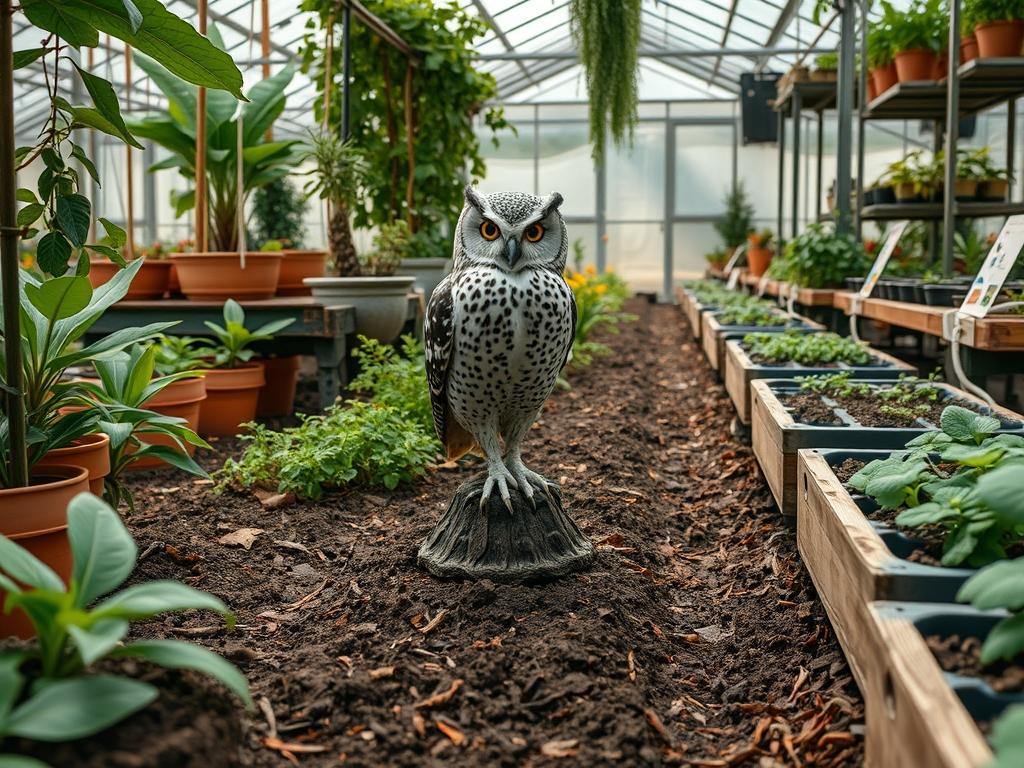
Maintaining a pristine landscape requires more than just high quality soil and a rigorous watering schedule. It demands a tactical approach to pest management, particularly when avian visitors begin to compromise the structural integrity of architectural features or the health of ornamental gardens. Professional landscaping is a multi-layered discipline where aesthetics must meet functionality. When birds congregate in unwanted areas, they often cause significant damage to retaining walls, clog intricate irrigation emitters with debris, and deface expensive hardscaping with acidic droppings. Strategic Owl Decoy Placement serves as a non-invasive, biological deterrent that preserves the “curb appeal” of a property while respecting the local ecosystem. Successful implementation requires an understanding of avian psychology and a keen eye for site elevation, ensuring that these functional ornaments blend seamlessly into the broader environment without looking like an afterthought.
Effective outdoor planning always accounts for the local climate and its impact on material longevity. In arid regions, bird droppings can bake onto flagstone or pavers, making them nearly impossible to remove without specialized chemical cleaners. In more temperate, humid environments, bird-related debris can harbor moisture against wooden structures, leading to premature rot and fungal growth. By integrating a decoy strategy into the initial landscape design, a consultant can proactively mitigate these risks. This approach ensures that the outdoor living space remains a sanctuary for the homeowner rather than a landing strip for local pests.
Landscape Design Principles
A professional landscape is built upon the pillars of symmetry, balance, and intentional focal points. When considering the layout of a garden, a landscape architect views the entire space as a series of elevation layers. The ground plane consists of turf, mulch, and low-lying groundcover, while the mid-plane includes shrubs and perennials. The canopy, however, is where avian activity is most prevalent. Integrating an owl decoy into this vertical hierarchy requires a balance between visibility and realism. If a decoy is placed in the center of a perfectly symmetrical formal garden, it may disrupt the visual flow; therefore, it should be positioned where the eye naturally travels, such as at the terminus of a walkway or atop a decorative post.
Irrigation planning is another critical principle that affects decoy success. Water features, such as fountains or ponds, are high-traffic areas for birds. Placing a decoy within the sightline of these water sources creates a psychological barrier. Furthermore, the use of native plants can be augmented by the decoy to protect sensitive berries or buds from being stripped. Visual balance is achieved when the decoy mimics a natural predator in its typical hunting position. For instance, mounting the device on a pergola or a high retaining wall creates a sense of realism that a ground-level placement lacks.
Plant and Material Selection
The following table outlines plants often used in professional landscapes that may require additional protection through strategic deterrent placement.
| Plant Type | Sun Exposure | Soil Needs | Water Demand | Growth Speed | Maintenance Level |
| :— | :— | :— | :— | :— | :— |
| Boxwood | Full to Part Sun | Well-drained loamy | Medium | Slow | High |
| Creeping Phlox | Full Sun | Sandy or Gritty | Low | Fast | Medium |
| Japanese Maple | Morning Sun | Acidic, Rich | Moderate | Slow to Medium | Moderate |
| Lavender | Full Sun | Rocky, Alkaline | Very Low | Medium | Low |
| Serviceberry | Full to Part Sun | Moist, Acidic | High | Medium | Medium |
| Fescue Turf | Full Sun to Shade | Loamy, Aerated | High | Fast | High |
High-end materials such as natural cedar, travertine, and powder-coated steel are frequently used in modern landscapes. These materials are investments that require protection. Selecting the right mulch is also vital. Dark hardwood mulch or pine bark nuggets provide a clean aesthetic but can be easily disturbed by birds foraging for insects. In these areas, a well-placed owl decoy can reduce the frequency of “mulch spray” onto adjacent walkways.
Implementation Strategy
The successful deployment of an owl decoy begins with a thorough topographic assessment. Step one involves identifying the primary “perch points” where birds currently congregate. These are typically the highest points of a roofline, fence post, or the upper branches of a specimen tree. Once these areas are identified, the landscape designer should plan for an anchor point that provides the decoy with a 360-degree field of vision.
Grading and drainage must be considered if the decoy is mounted on a standalone pole. Ensure the soil is compacted and the base is surrounded by at least 3 inches of gravel to prevent water from pooling around the support structure, which could lead to leaning or instability over time. When installing the decoy, it is essential to use a level and a plumb line to ensure the figure sits naturally. A leaning owl is a clear signal to birds that the object is inanimate.
To maximize effectiveness, the strategy must include a “rotation schedule.” Birds are intelligent creatures. If a decoy remains stationary for more than 7 to 10 days, they will recognize it as a fake. Moving the owl between different elevation layers, such as from a retaining wall to a tree limb, creates the illusion of a living predator. Additionally, adding a small amount of sand or gravel inside the decoy will provide the necessary weight to prevent it from blowing over during high-wind events, while still allowing for easy relocation.
Common Landscaping Failures
One of the most frequent errors in landscape management is the neglect of subsurface drainage. When water does not move away from foundations or garden beds, it creates soft spots that attract birds looking for worms and grubs. If you place a decoy in a yard with poor drainage, the abundance of food will soon override the fear of the predator. Similarly, soil compaction prevents root systems from expanding, leading to weak plants that are more susceptible to bird damage.
Another significant failure involves improper spacing of plants. When shrubs are huddle too closely, they create dense thickets that provide perfect hiding spots for smaller birds, rendering a decoy visible from the air completely useless. In terms of irrigation inefficiencies, over-watering creates puddles on pavers, attracting birds for bathing. If the decoy is not placed in direct sight of these puddles, the deterrent effect is lost. Finally, many homeowners fail to account for “habituation,” which is the process of birds becoming accustomed to the decoy. If the owl is never moved or cleaned, it becomes just another piece of the static landscape.
Seasonal Maintenance
Landscape management is a year-round commitment. In the spring, the focus is on protecting new growth. As perennials emerge and turf is re-seeded, owl decoys should be placed near these vulnerable zones. This is also the time to check irrigation lines for leaks that might attract thirsty wildlife.
During the summer, the sun is the primary concern. UV rays can fade the realistic paint on a decoy, reducing its effectiveness. Applying a clear UV-resistant spray can extend the life of the decoy. Additionally, ensure that mulch depth is maintained at 2 to 3 inches to suppress weeds and keep soil moisture levels consistent.
In the autumn, as leaves fall, the decoy becomes more visible. This is a prime time to move the decoy to higher elevation points, such as a chimney or a high-set gutter, to protect the property from migratory birds. Clear away fallen debris from drainage grates to prevent standing water.
Winter landscape maintenance often involves storing sensitive equipment. If you live in a region with heavy snow and ice, it may be wise to bring the decoy indoors to prevent the plastic from becoming brittle. However, if birds remain a problem during the colder months, ensure the decoy is cleared of snow so its predatory features remain visible. Check retaining walls for frost heave and ensure that all hardscaping is treated with bird-safe de-icing agents if necessary.
Professional Landscaping FAQ
Where is the most effective place to put an owl decoy?
Place the decoy at the highest possible point with a clear line of sight. Locations such as fence posts, pergola rafters, or roof peaks are ideal because they mimic the natural hunting high-ground used by real owls.
How often should I move the decoy to keep it effective?
You should change the position of the owl every 5 to 7 days. Moving it to different elevation layers or shifting it to the opposite side of a walkway prevents birds from becoming accustomed to its presence.
Will an owl decoy scare away beneficial songbirds too?
Yes, most birds perceive the owl as a universal predator. If you want to encourage songbirds in specific areas, keep the decoy far away from bird feeders or native flowering shrubs intended for wildlife enjoyment.
Does the height of the decoy matter for bird deterrence?
Absolutely. An owl placed on the ground is less threatening than one perched at 6 to 10 feet high. Placing it at an elevated “vantage point” sends a stronger signal to pests that the area is being hunted.
Can I use multiple decoys on a large property?
For landscapes exceeding 0.5 acres, using two or three decoys is recommended. Space them out near different focal points, like a retaining wall and a specimen tree, to create a “predator zone” across the entire site.