
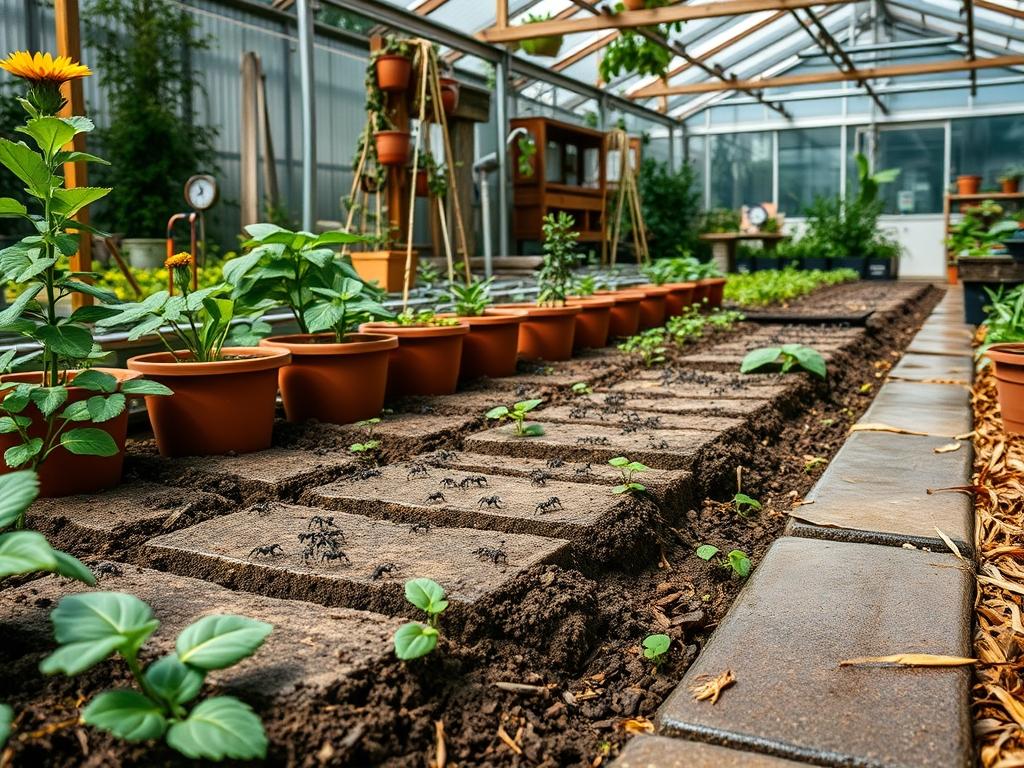
Maintaining the structural integrity and aesthetic value of a professional landscape requires more than just selecting high quality materials and vibrant flora. It involves a constant battle against the elements and biological pressures that seek to undermine hardscaping. One of the most persistent issues encountered by property owners is the presence of ants in paver cracks. While a few insects may seem inconsequential, their behavior as subterranean architects can lead to significant structural failure. As ants tunnel through the bedding sand and jointing material, they displace the fine particles that lock the pavers together. This excavation creates voids beneath the surface, leading to uneven settling, tripping hazards, and a loss of the cohesive visual line that defines a well executed patio or walkway. A landscape that loses its level surface immediately loses its curb appeal; it conveys a sense of neglect that detracts from the overall outdoor functionality. Addressing these pests is not merely about pest control; it is a critical component of site engineering and long term asset management.
Landscape Design Principles
Successful landscape design rests on the pillar of structural stability, which is often invisible to the casual observer. When we plan a site, we prioritize symmetry and visual balance, ensuring that every walkway and retaining wall serves as a focal point or a functional artery within the garden. However, these elements are only as stable as their foundation. To prevent ants in paver cracks from ruining this balance, design must account for elevation layers and drainage. In areas prone to heavy ant activity, we often recommend incorporating a slight grade of 2 percent to ensure water moves away from the joints. Water retention softens the bedding sand, making it easier for ants to excavate.
Integrating irrigation planning into the initial design is also vital. Overly saturated joints attract colonies looking for moisture, whereas a properly calibrated drip system keeps moisture concentrated at the root zones of plants rather than under the hardscape. Furthermore, the use of focal points, such as a large Basalt Fountain or a Granite Bench, can be strategically placed to distract the eye from minor joint wear, but the underlying engineering must remain sound. We utilize visual balance by framing paved areas with dense plantings that discourage ant nesting near the edges of the stone.
Plant and Material Selection
The following table outlines specific plant species and structural materials that contribute to a resilient landscape while offering varying levels of resistance to the environmental conditions that favor ant colonization.
| Plant or Material Type | Sun Exposure | Soil Needs | Water Demand | Growth Speed | Maintenance Level |
| :— | :— | :— | :— | :— | :— |
| Creeping Thyme | Full Sun | Well Drained | Low | Moderate | Low |
| Lavender | Full Sun | Sandy/Loam | Very Low | Slow | Moderate |
| Polymeric Sand | N/A | Subsurface | N/A | N/A | Minimal |
| Sedum | Full to Partial | Thin/Rocky | Very Low | Fast | Low |
| Rosemary | Full Sun | Well Drained | Low | Moderate | Low |
| Geotextile Fabric | N/A | Subgrade | N/A | N/A | Low |
| Mint | Partial Shade | Moist | Moderate | Aggressive | High |
Implementation Strategy
Implementing a landscape that stands up to the pressures of ants in paver cracks begins with a rigorous installation process. The first step involves proper grading of the subgrade to ensure a stable base. We typically excavate to a depth of 6 inches to 8 inches depending on the expected load. A layer of Crushed Stone or Road Base is then applied and compacted using a Vibratory Plate Compactor. This dense layer provides a hostile environment for tunneling insects compared to loose, natural soil.
Once the base is set, a thin layer of Bedding Sand is applied, followed by the placement of the pavers. The most critical step in eliminating ants is the application of Polymeric Sand. Unlike traditional masonry sand, polymeric sand contains chemical binders that activate when misted with water, hardening into a flexible, plastic-like bond. This creates a physical barrier that ants cannot easily penetrate or excavate. To apply it correctly, the pavers must be completely dry. Sweep the sand into the joints until they are filled to within 1/8 inch of the chamfer edge. After sweeping away all excess dust from the surface, use a light mist to trigger the binding agents.
Edging is the final component of a robust implementation. Using a Heavy Duty Plastic Edge Restraint or a Concrete Haunch prevents the pavers from splaying outward. When stones shift, the seals in the jointing sand break, providing an immediate entry point for ants. By keeping the stones tightly locked, you minimize the opportunity for pests to establish a colony within the hardscape footprint.
Common Landscaping Failures
Many homeowners face recurring problems with ants in paver cracks because of fundamental installation errors. One of the most common failures is improper drainage. If the subbase remains saturated, it creates a soft, inviting environment for insects. Furthermore, moisture weakens the chemical bonds of even the best jointing materials. If the site does not have a clear path for runoff, the sand will eventually wash out or be pushed out by ant activity.
Another frequent mistake is root overcrowding. Planting large trees too close to a paved surface leads to roots lifting the stones. As the pavers move, the joints crack, and ants find a perfect highway into the structure. We also see many issues arising from the use of standard play sand rather than Polymeric Sand. Standard sand is easily moved by wind, water, and ants; it offers no structural reinforcement. Finally, soil compaction is often overlooked. If the underlying soil was not sufficiently compacted before the installation of the Crushed Stone, the entire patio will settle unevenly over time, creating large gaps that are impossible to keep clear of pests.
Seasonal Maintenance
Landscape management is a year round commitment that changes with the seasons. In the spring, the primary focus is on cleaning and inspection. Use a Stiff Bristle Broom to clear away debris that might have accumulated over the winter. This is the best time to check for the telltale small mounds of sand that indicate ant activity. If you spot them, a localized application of Boric Acid or a professional grade Liquid Insecticide can stop the colony before it expands.
During the summer, the heat can cause pavers to expand. This thermal movement can sometimes hairline crack the jointing sand. Regularly rinsing the surface with a Pressure Washer on a low setting can remove organic matter that ants use for food, but be careful not to blast out the sand itself. In the autumn, the removal of leaves is crucial. Decomposing organic matter provides both cover and nutrients for various pests. Finally, in the winter, avoid using harsh de-icing salts that can degrade the binders in your Polymeric Sand. Instead, use a Plastic Shovel to remove snow and lean on sand for traction if necessary, though be mindful that this may require a deep cleaning once the spring thaw arrives.
Professional Landscaping FAQ
How does polymeric sand prevent ant infestations?
Polymeric Sand contains specialized additives that harden upon wetting. This creates a durable, mortar-like joint that acts as a physical deterrent. Ants are unable to mine through the hardened material, effectively preventing them from building tunnels beneath your pavers.
Can I use vinegar to get rid of ants in my cracks?
White vinegar is a temporary repellent that disrupts ant pheromone trails. However, it does not solve the underlying structural issue. To permanently stop ants in paver cracks, you must replace loose sand with a hardened, professional-grade jointing material.
Why are ants attracted to my patio specifically?
Patios offer shelter, warmth, and often a nearby food source. The spaces beneath pavers are protected from predators and extreme weather. If your joints consist of loose sand, it provides an ideal, easily excavatable medium for their complex nesting structures.
Will ants actually cause my pavers to sink?
Yes. By removing the sand that supports the pavers, ants create empty pockets. Over time, the weight of the stones or foot traffic causes the pavers to drop into these voids, leading to an uneven and potentially dangerous surface.
Is it necessary to remove all old sand before re-sanding?
For the best results, yes. Use a Pressure Washer to clean out at least 1 inch of depth in the joints. Removing the old, infested sand ensures that the new Polymeric Sand can form a solid, uninterrupted bond with the stone edges.