
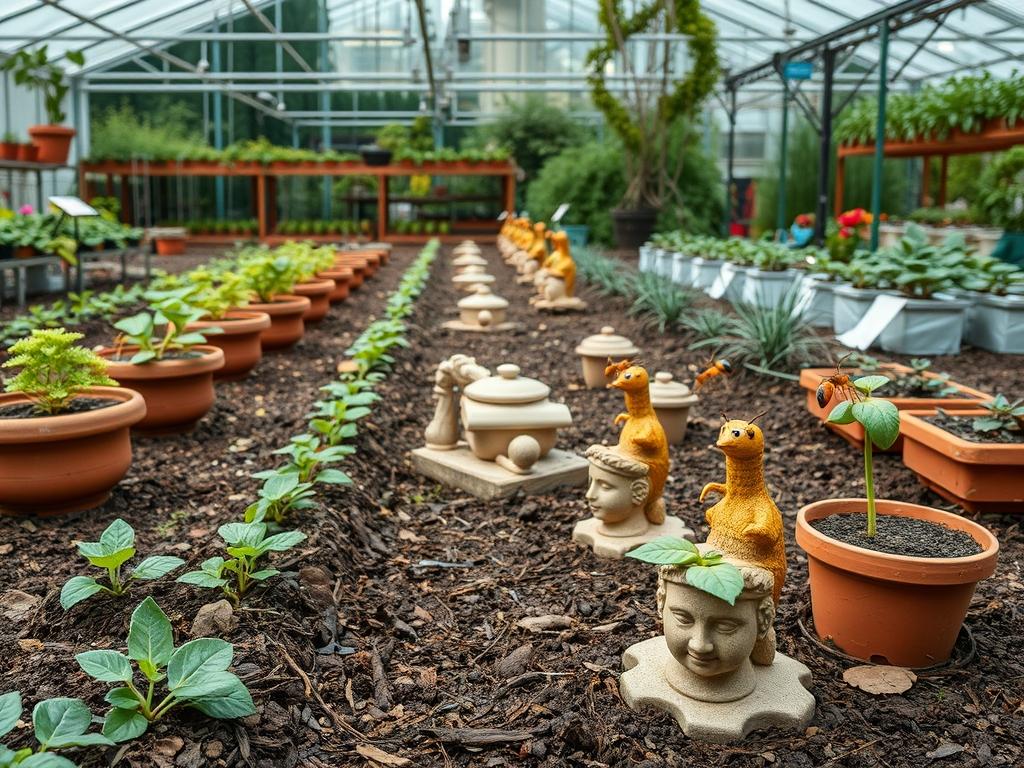
Maintaining a high-end residential landscape requires an acute understanding of how various design elements interact with the local ecosystem. When we introduce focal points such as stone or resin ornamentation, we are not simply adding a visual anchor; we are creating a micro-environment. One of the most persistent challenges for property owners is the presence of ants in garden statues, a phenomenon that often originates because of the hollow construction of many modern garden accents. These hollow bases provide a thermally stable, dry, and protected cavity that acts as a perfect incubator for colonies. From a landscape architecture perspective, this can compromise the integrity of the installation and impact the surrounding soil health. Achieving the desired curb appeal and outdoor functionality requires a proactive approach to site preparation, ensuring that these decorative elements do not become unintentional pest reservoirs that undermine the overall garden health.
The presence of ants in garden statues is rarely a localized issue; it is usually symptomatic of broader environmental factors. Many landscape designs utilize statues to mark the transition between manicured turf and wilder perimeter plantings. If the drainage in these transition zones is poor, moisture can collect around the pedestal. Ants, seeking to escape saturated soil during heavy rains, find the elevated, hollow interior of a statue to be a structural sanctuary. This choice of nesting site is a biological response to the architectural flaws of the ornament itself. As consultants, we look at the climate, the site grading, and the specific materials involved to determine the best mitigation strategies. A well-planned garden should integrate these elements seamlessly without inviting structural degradation or invasive insect activity that could eventually migrate toward the home foundation or delicate root systems.
Landscape Design Principles
When designing a professional-grade garden, symmetry and focal points dictate where the eye travels. A statue often serves as the terminal element of a visual axis, demanding a sense of permanence and weight. To ensure success, we must consider elevation layers. Instead of placing a statue directly on the soil or mulch, a professional installation utilizes a concrete footing or a paver base to create a physical barrier between the ground and the hollow interior. This elevation prevents moisture wicking, which is the primary attractant for ants in garden statues. Without this separation, the humid air trapped inside the statue creates a fungal growth environment that further encourages insect colonization.
Visual balance is achieved through the careful layering of textures. If a statue is placed in a bed of heavy hardwood mulch, it may become a bridge for pests. We suggest using a gravel apron or a decorative stone border around the base of the statue. This serves two purposes. First, it provides a clean aesthetic transition that highlights the art piece. Second, it creates a dry, inhospitable zone for ants. Strategic irrigation planning is also vital; drip lines should be redirected away from the base of focal points. Over-saturation at the base of a hollow structure is the most common reason for infestation. By keeping the immediate perimeter dry, we maintain the structural integrity of the site and the health of the surrounding flora.
Plant and Material Selection
The following table outlines plants often used to flank garden statues and their specific requirements. Choosing the right companion plants can influence the local insect population by either attracting beneficial predators or repelling pests.
| Plant Type | Sun Exposure | Soil Needs | Water Demand | Growth Speed | Maintenance Level |
| :— | :— | :— | :— | :— | :— |
| English Lavender | Full Sun | Well-Drained | Low | Moderate | Low |
| Dwarf Boxwood | Part/Full Sun | Loamy/Rich | Medium | Slow | Moderate |
| Creeping Thyme | Full Sun | Sandy/Poor | Low | Fast | Low |
| Japanese Maple | Partial Shade | Acidic/Moist | Medium | Slow | High |
| Rosemary | Full Sun | Sandy/Drained | Low | Moderate | Low |
| Hosta | Full Shade | Humus-Rich | Medium | Moderate | Low |
Using aromatic herbs like Rosemary or English Lavender near statues can act as a natural deterrent for many insects. These plants thrive in the same well-drained conditions that are necessary to prevent ants in garden statues. Additionally, incorporating landscape fabric beneath a pea gravel bed provides a long-term solution to weed growth and soil erosion around these permanent fixtures.
Implementation Strategy
The successful implementation of a garden layout begins with precise grading. Before a statue is even moved to the site, the ground must be leveled and slightly crowned to ensure water flows away from the center. We recommend excavating a hole approximately 6 inches deep and twice the width of the statue base. This area should be filled with compacted crushed limestone or a similar aggregate base. This creates a stable foundation that resists shifting during freeze-thaw cycles and provides superior drainage.
Once the base is set, a solid stone plinth or a precast concrete pad should be installed. If the statue is hollow, the professional approach is to seal the bottom with a polyurethane sealant or a custom-fitted metal plate before placing it on the pad. This effectively removes the habitat potential for ants in garden statues by eliminating the access point. For larger installations, applying a thin layer of diatomaceous earth inside the cavity before sealing it provides an extra layer of organic protection. Edging the surrounding garden bed with steel edging or landscape timbers helps maintain the integrity of the mulch levels, preventing the build-up of organic matter against the statue’s base.
Common Landscaping Failures
One of the most frequent failures in residential landscaping is the mistake of “volcano mulching.” This occurs when mulch is piled high against the base of trees or statues. This practice traps moisture and creates a direct highway for wood-boring insects and ants to enter the hollow voids of garden ornaments. Furthermore, poor drainage planning often results in “pooling,” where water sits in a depression around a focal point for days. This not only invites ants but can lead to the “spalling” of stone and concrete due to moisture expansion.
Root overcrowding is another significant issue. When aggressive plants are placed too close to a heavy statue, the growing root systems can tilt or crack the concrete footing. This creates gaps that allow ants in garden statues to establish colonies with ease. Soil compaction, often caused by heavy foot traffic during the construction phase, prevents water from penetrating the ground, leading to runoff that erodes the foundation of garden art. Finally, improper spacing between the irrigation heads and the hardscape can lead to constant spray hitting the statue, which accelerates the degradation of finishes and keeps the interior cavity perpetually damp.
Seasonal Maintenance Management
Effective landscape management changes with the seasons. In the spring, the primary focus should be on inspecting the integrity of the foundations. Check for any settling or tilting that may have occurred over the winter. This is also the time to apply a fresh 2 inch layer of cedar mulch, which has natural insect-repellent properties, making it less likely for you to find ants in garden statues during the peak summer months.
During the summer, monitor the irrigation system to ensure that focal points are not being over-watered. If you notice ant trails leading up the side of a statue, it is an indication that the interior micro-climate has become too attractive. In autumn, clear away fallen leaves and organic debris from the base of all ornaments. Rotting foliage provides both food and cover for pests. Finally, in winter, some resin or thin-walled stone statues should be covered or moved to prevent cracking. For permanent fixtures, ensure the drainage paths are clear of snow and ice to prevent meltwater from seeping into the hollow base through capillary action.
Professional Landscaping FAQ
Why do ants specifically choose hollow statues for nests?
Hollow bases offer a temperature-controlled environment protected from rain and predators. This structural cavity mimics the natural voids found in old logs or rock crevices, making it an ideal location for colony expansion and brood protection.
What is the best material for a statue base to prevent pests?
A solid concrete pad or a natural granite plinth is best. These materials do not rot and can be leveled easily. Elevating the statue off the organic mulch prevents easy access for crawling insects.
Can I seal the bottom of a hollow statue myself?
Yes, using an exterior-grade silicone sealant or an expandable foam is a common DIY fix. However, for high-end landscapes, we recommend a custom-cut pressure-treated plywood or composite base that is mechanically fastened and then sealed.
How does irrigation affect ants in garden statues?
Excessive moisture near the base creates a humid interior environment. Ants are drawn to this humidity for survival. Adjusting irrigation to target plant roots rather than the hardscape significantly reduces the likelihood of nesting.
Does mulch selection matter for statue placement?
Absolutely. Avoid moisture-retaining mulches like shredded hardwood right against the base. Instead, use cedar chips or a gravel perimeter. These materials dry out quickly and are much less attractive to nesting colonies looking for stable conditions.