
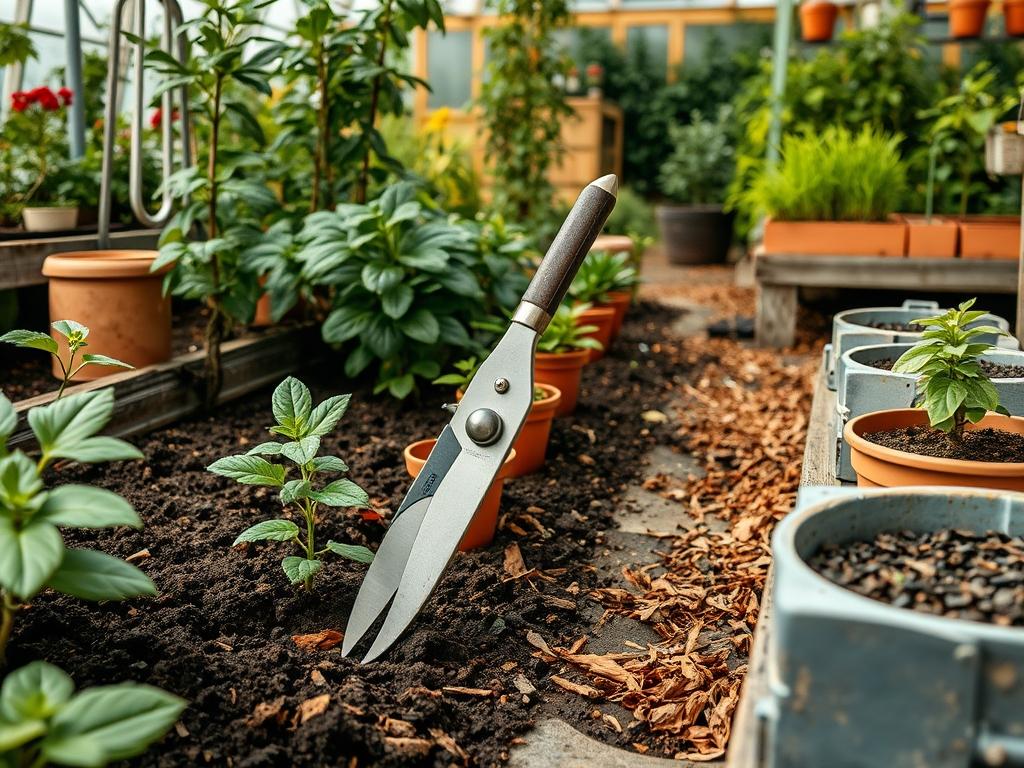
Maintaining a high-end landscape requires more than just a creative eye and a selection of expensive specimens; it demands a rigorous commitment to tool hygiene and site management. When we discuss the structural integrity of a garden, we are often talking about the health of the vascular systems within the plants themselves. A professional landscape environment is a living investment that gains value as trees and shrubs mature. However, this value is frequently compromised by the unintentional spread of pathogens via neglected equipment. Cleaning pruning shears is not merely a chore for the fastidious gardener; it is a critical protocol in disease prevention and aesthetic preservation. Whether you are managing an expansive estate in a humid coastal climate or a minimalist urban courtyard, your ability to provide clean, surgical cuts determines the longevity of your greenery. Poorly maintained tools crush plant tissue, leaving ragged edges that serve as invitation for fungal infections and pest infestations. Curb appeal is built upon the precision of your hedges and the vitality of your specimen trees. If your pruning tools are dull or contaminated, every cut you make risks the health of your entire outdoor living space.
Landscape Design Principles
Professional landscape design relies on a structured hierarchy of visual and functional elements. Symmetry provides a sense of formality and order, often achieved through mirrored plantings of Dwarf Boxwood or structured rows of European Hornbeam. To achieve this symmetry, the architect must plan for the eventual mature spread of the specimens, ensuring that the visual weight is balanced across the central axis of the property. Focal points serve as the anchor of the design, drawing the eye toward a specific feature such as a water installation, a structural Japanese Maple, or a custom-built Retaining Wall. These focal points are most effective when framed by neutral or low-texture backgrounds, such as a well-kept lawn or a simple stone facade.
Elevation layers are equally vital for creating depth. A common mistake in amateur landscaping is “flat planting,” where all vegetation exists on a single horizontal plane. By utilizing Retaining Walls and raised beds, a designer can introduce verticality and interest. This layering should extend to the plant selection itself, moving from low-growing groundcovers like Creeping Thyme to mid-level perennials, and finally to the overarching canopy. Walkways should be designed to guide movement while providing a sensory experience, using materials like Flagstone or Decomposed Granite to define the path. Finally, irrigation planning must be integrated into the initial design phase. Each hydrozone should be mapped according to the water needs of the plants, ensuring that drought-tolerant species are not drowned by the requirements of moisture-loving tropicals.
Plant and Material Selection
Selecting the right materials involves a intersection of climate data, soil chemistry, and maintenance capacity. Below is a professional-grade selection of common landscape staples used in modern design.
| Plant Type | Sun Exposure | Soil Needs | Water Demand | Growth Speed | Maintenance Level |
| :— | :— | :— | :— | :— | :— |
| Emerald Green Arborvitae | Full Sun | Well-drained | Moderate | Medium | Low |
| Japanese Maple | Partial Shade | Acidic, Rich | Moderate | Slow | Medium |
| Blue Haven Juniper | Full Sun | Sandy, Dry | Low | Medium | Low |
| Hydrangea Macrophylla | Partial Shade | Moist, Loamy | High | Fast | Medium |
| Dwarf English Boxwood | Full Sun to Part Shade | Neutral | Moderate | Slow | High |
| Lavender Phenomenal | Full Sun | Gritty, Alkaline | Low | Fast | Low |
Implementation Strategy
The transition from a blueprint to a functional backyard requires a phased approach. The first priority is always grading. The land must be sloped to move water away from the home foundation at a minimum 2% grade. Without proper grading, even the most beautiful garden will eventually succumb to root rot or structural damage. Once the grade is established, drainage systems such as French Drains or catch basins should be installed in low-lying areas.
Hardscaping follows the drainage phase. This includes the installation of Retaining Walls, patios, and permanent walkways. When laying stone or pavers, a base of at least 4 inches of compacted gravel topped with 1 inch of bedding sand is standard for preventing shifting over time. After the hardscape is set, the softscaping begins. Edging should be installed to create a crisp boundary between turf and garden beds. We recommend Steel Edging or heavy-duty Poly-Aluminum for a clean, permanent line. Planting holes must be dug twice as wide as the root ball but no deeper, ensuring the flare of the trunk remains above the soil line. Finally, apply a 3-inch layer of organic Mulch to regulate soil temperature and retain moisture, being careful to keep the mulch away from the direct contact with plant stems.
Common Landscaping Failures
Failure in the landscape often stems from a lack of foresight regarding biological growth. Root overcrowding is a primary concern. Homeowners frequently plant Leyland Cypress or Norway Spruce too close to fences or foundations, leading to structural damage and stunted growth within a decade. Improper spacing also restricts airflow, which is a leading cause of powdery mildew and other fungal issues.
Soil compaction is another silent killer. During construction, heavy machinery compresses the soil, destroying the pore spaces necessary for oxygen and water to reach roots. Professional installers should use Aerators or incorporate organic matter to remediate compacted sites before planting. Irrigation inefficiencies are also prevalent. Over-watering is just as damaging as under-watering; it leads to anaerobic soil conditions where roots cannot breathe. Smart irrigation controllers equipped with weather sensors are the professional standard for avoiding these costly errors.
Seasonal Maintenance: The Ultimate Guide to Cleaning Pruning Shears and Saws
The most important aspect of seasonal maintenance is the care of your cutting tools. Cleaning pruning shears and saws is the first line of defense against the cross-contamination of your landscape. In the spring, before the first flush of growth, all tools should be inspected.
To properly clean your Bypass Pruners, start by disassembling the tool if the design allows. Use a stiff Wire Brush or Steel Wool to remove dried sap and rust. For stubborn resin, a specialized blade cleaner or even a bit of kerosene can be effective. Once the physical debris is removed, disinfection is the next step. Wipe the blades down with a solution of 70% isopropyl alcohol or a 10% bleach solution. Alcohol is preferred as it does not require rinsing and does not corrode the metal as quickly as bleach.
Sharpening is the next phase of the maintenance cycle. Use a Diamond File or a Whetstone to honey the edge of the cutting blade. Always follow the factory bevel, usually at an angle of 20 to 30 degrees. Never sharpen the flat side of a bypass blade, as this will create a gap between the blades, leading to crushed stems rather than clean cuts. For Folding Saws or Pole Saws, use a slim taper file to sharpen each individual tooth. After sharpening, lubricate the pivot point with a few drops of 3-in-One Oil or a dry silicone lubricant to ensure smooth operation.
During the summer, focus on deadheading and light shaping. Always carry a small spray bottle of alcohol to sanitize your shears between different plants, especially when working with species susceptible to Fire Blight or Verticillium Wilt. In autumn, a deep cleaning is necessary before winter storage. Remove all organic matter, re-oil the blades to prevent rust during the humid winter months, and store them in a dry environment. Winter is the time for structural pruning of deciduous trees. Because the sap is down, this is the safest time to make large cuts with a Hand Saw, provided the tool is sharp enough to leave a smooth surface on the branch collar.
Professional Landscaping FAQ
Why is cleaning pruning shears so important for plant health?
Dirty tools act as vectors for bacteria and fungi. When you move from a diseased plant to a healthy one without disinfecting, you are effectively injecting pathogens directly into the fresh vascular wounds of your prize specimens.
How often should I sharpen my landscaping saws?
A professional should touch up the edge every few hours of heavy use. For the average homeowner, a thorough sharpening at the beginning of each season is usually sufficient, provided the blades are kept clean and free of resin.
What is the best mulch for a low-maintenance garden?
Triple-shredded hardwood mulch is excellent for most applications. It stays in place on slopes, decomposes slowly to enrich the soil, and provides superior weed suppression compared to pine straw or decorative stone.
Can I use any oil to lubricate my pruning tools?
While many oils work, a clear machine oil or a specialized tool lubricant is best. Avoid vegetable oils from the kitchen, as they can become gummy over time and attract dirt, eventually seizing the tool mechanism.
How do I prevent root rot in a heavy clay soil?
Improve the site by incorporating expanded shale or organic compost to increase porosity. Additionally, plant shrubs slightly above the grade in mounds or “muffins” to ensure the root crown never sits in standing water.