
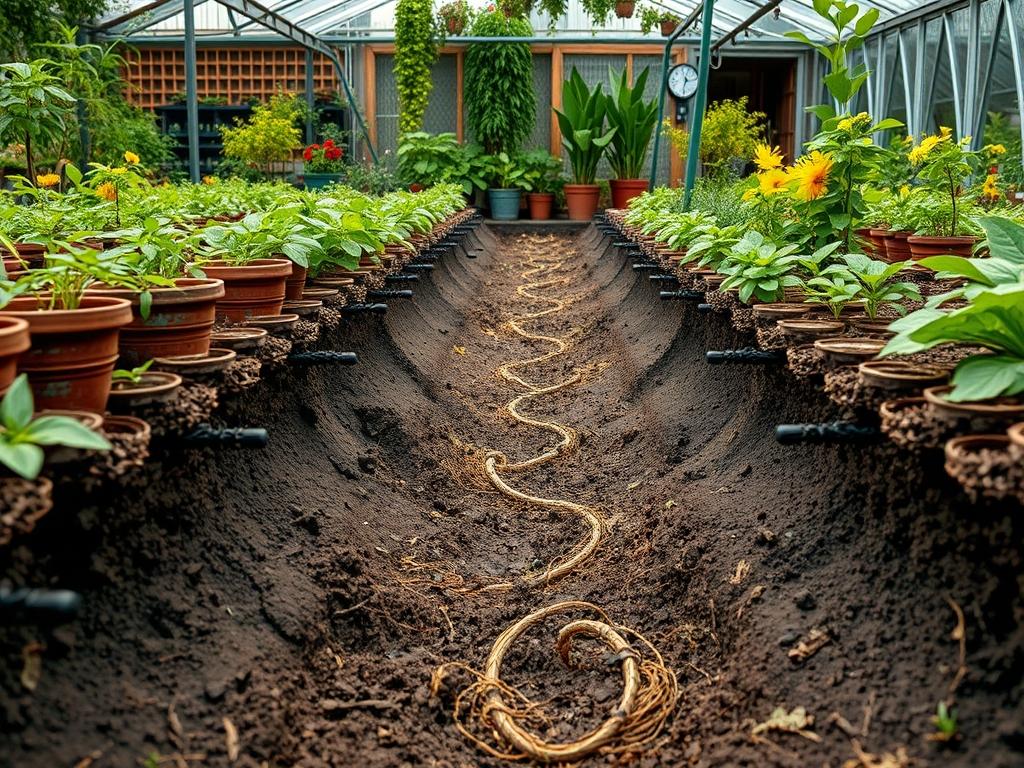
Architectural landscaping is a discipline that requires a delicate balance between artistic vision and biological reality. When homeowners look at a pristine lawn, they often focus on the vibrant hues of the Perennial Ryegrass or the precise placement of a Granite Boulder, yet the most critical functions of a successful landscape occur beneath the surface. Soil health is the primary driver of plant vitality, curb appeal, and site longevity. One of the most misunderstood aspects of subsurface ecology is the role of macro-invertebrates, specifically the impact of Ant Tunnels in Soil. While many property owners view these small excavations as a nuisance that threatens the visual uniformity of a lawn, these structures actually serve as a sophisticated, natural drainage system. In regions prone to heavy seasonal rainfall or characterized by high clay content, these biological voids act as conduits for vertical water movement, preventing the surface ponding that often leads to root rot and fungal pathogens.
Effective landscape planning must consider the environmental stressors of the local climate, such as heat waves that bake the ground into a hard crust or torrential storms that overwhelm traditional Gutter Systems. A landscape architect evaluates a site not just by its current state, but by its future potential for resilience. This involves understanding how water infiltrates the profile and how gas exchange occurs in the root zone. By recognizing Ant Tunnels in Soil as a component of a healthy ecosystem, a designer can leverage these natural processes to reduce the need for intensive mechanical aeration. A functional outdoor space is more than just a collection of plants; it is a living infrastructure that manages water, supports biodiversity, and maintains its structural integrity over decades.
Landscape Design Principles
Successful landscape design rests on the application of fundamental principles that guide the eye and ensure the longevity of the installation. Symmetry and visual balance provide the framework for a professional look. We often utilize focal points, such as a large Specimen Tree or a custom Water Feature, to anchor the design and provide a destination for the viewer. However, these aesthetic choices must be supported by sound engineering. Elevation layers, created through the use of Timber Retaining Walls or tiered Stone Planters, add depth and allow for sophisticated drainage management. By varying the height of the terrain, we can direct runoff toward specialized collection areas, such as Rain Gardens, where the soil is specifically amended to absorb high volumes of water.
Irrigation planning is another pillar of professional design. It is not enough to simply provide water; it must be delivered with precision to avoid soil saturation. When designing walkways, we prioritize materials that allow for moisture penetration. The use of Permeable Pavers or Crushed Gravel over a Geotextile Fabric base ensures that the ground continues to breathe and absorb moisture. In this context, the presence of Ant Tunnels in Soil within the surrounding garden beds acts as a secondary, micro-scale irrigation network. These tunnels break up the laminar flow of water, encouraging it to move deeper into the subgrade rather than shearing off across the surface. This subterranean complexity ensures that even the most symmetrical and formal garden remains biologically active and structurally sound.
Plant and Material Selection
Selecting the right components for a landscape requires an analysis of both the hardscape materials and the botanical specimens. The following table highlights several popular choices for modern professional landscapes, focusing on their specific requirements and growth characteristics.
| Plant Type | Sun Exposure | Soil Needs | Water Demand | Growth Speed | Maintenance |
| :— | :— | :— | :— | :— | :— |
| Buxus sempervirens | Full Sun to Shade | Well-Drained | Moderate | Slow | Medium |
| Lavandula angustifolia | Full Sun | Sandy/Rocky | Low | Moderate | Low |
| Acer palmatum | Partial Shade | Acidic/Loamy | High | Slow | High |
| Panicum virgatum | Full Sun | Adaptable | Low | Fast | Low |
| Hydrangea macrophylla| Shade | Organic/Rich | High | Moderate | Medium |
In addition to plant life, the selection of hardscape materials is vital. We often specify Basalt Steps, Cedar Mulch, and Steel Edging to define spaces. For drainage projects, a 4-inch Corrugated Pipe wrapped in a Silt Sock is a standard requirement to move water away from foundations. When these materials are combined with a healthy soil profile, the entire landscape operates at peak efficiency.
Implementation Strategy
The implementation of a professional landscape begins with a comprehensive site survey and the establishment of a clear layout. We start by using a Transit Level to determine the natural grade of the property. Proper grading is the most important step in any installation; the land must slope away from the primary residence at a minimum of a 2 percent grade. Once the grade is established, we mark out the beds and walkways using Marking Paint or Landscape Stakes. Excavation follows, during which we remove any compacted debris and replace it with a high quality Topsoil Blend consisting of sand, silt, and organic compost.
The next step is the installation of hardscape elements. Retaining Walls are built on a foundation of Compacted Road Base to ensure they do not shift during freeze-thaw cycles. Edging is then installed to create a crisp transition between the turf and the planting beds. We recommend Steel Edging for its durability and thin profile. After the construction is complete, we plant the larger trees and shrubs, ensuring the root flare is positioned at or slightly above the soil surface. Finally, we apply a 3-inch Layer of Mulch to retain moisture and suppress weeds. During this process, we take care not to destroy the underlying soil structure. By avoiding excessive tilling, we preserve the existing Ant Tunnels in Soil, which will immediately begin to assist with the infiltration of water into the new landscape.
Common Landscaping Failures
One of the most frequent failures in residential landscaping is the neglect of drainage. Many contractors focus on the surface appearance while ignoring the subsurface hydrology. Soil compaction is a primary culprit; when heavy machinery is used without later aeration, the soil becomes as dense as concrete. This leads to standing water and the eventual death of the root system. Another common mistake is the improper spacing of plants. A 1-gallon Shrub may look small today, but without considering its mature spread, the garden will become overcrowded within three years, leading to poor air circulation and pest outbreaks.
Irrigation inefficiencies also plague many properties. Over-watering not only wastes resources but also leaches nutrients out of the soil. Furthermore, the use of non-permeable landscape fabric can sometimes stifle the soil. While it prevents weeds, it can also create a barrier that prevents Ant Tunnels in Soil and other biological features from reaching the surface, effectively sealing the ground off from oxygen. Professional designers avoid these pitfalls by prioritizing soil porosity and selecting plants that are appropriate for the specific microclimate of the site.
Seasonal Maintenance
Landscape management is a year-round commitment that changes with the seasons. In the spring, the focus is on cleanup and preparation. This involves using a Power Rake to remove thatch from the lawn and applying a Pre-emergent Herbicide to prevent weed seeds from germinating. We also recommend testing the soil with a pH Meter to determine if any amendments, such as lime or sulfur, are necessary. As summer arrives, the priority shifts to irrigation management. We check all Drip Emitters and Sprinkler Heads for clogs and adjust the timers to account for increased evaporation rates.
Autumn is the ideal time for planting and soil improvement. The cooling temperatures reduce transplant shock for new trees. We also focus on leaf removal, as a thick mat of leaves can suffocate the grass and block the entrances to Ant Tunnels in Soil, reducing their effectiveness for winter drainage. Finally, in the winter, we perform structural pruning on deciduous trees using Bypass Pruners. We also inspect hardscapes for any cracks caused by shifting earth. By following this seasonal cadence, the landscape remains resilient, ensuring that the biological and structural elements work in harmony throughout the year.
Professional Landscaping FAQ
Why should I allow ants to stay in my garden beds?
Ant Tunnels in Soil create natural macropores that improve water infiltration and oxygen levels. These biological pathways help prevent soil compaction, which is a leading cause of plant stress and poor drainage in heavy clay environments.
How do I fix a lawn that has major drainage issues?
Start by assessing the grade with a Landscape Level. You may need to install a French Drain using Perforated Pipe and Clean Gravel. Incorporating organic matter also helps restore natural drainage pathways over time.
What is the best way to prevent soil compaction?
Minimize heavy foot traffic and avoid using heavy equipment on wet soil. Regular aeration, either mechanical or biological through the activity of soil organisms, is essential for maintaining the interstitial spaces required for root respiration and water flow.
How deep should my mulch layer be for optimal health?
A 3-inch depth is ideal for most applications. This thickness provides enough coverage to suppress weeds and retain moisture without suffocating the soil or preventing the beneficial movement of air and water into the subsurface layers.
Can ant tunnels actually help my irrigation system?
Yes, by increasing the vertical permeability of the soil, Ant Tunnels in Soil allow irrigation water to reach the deep root zone more effectively. This reduces surface runoff and ensures that water is delivered where plants need it most.