
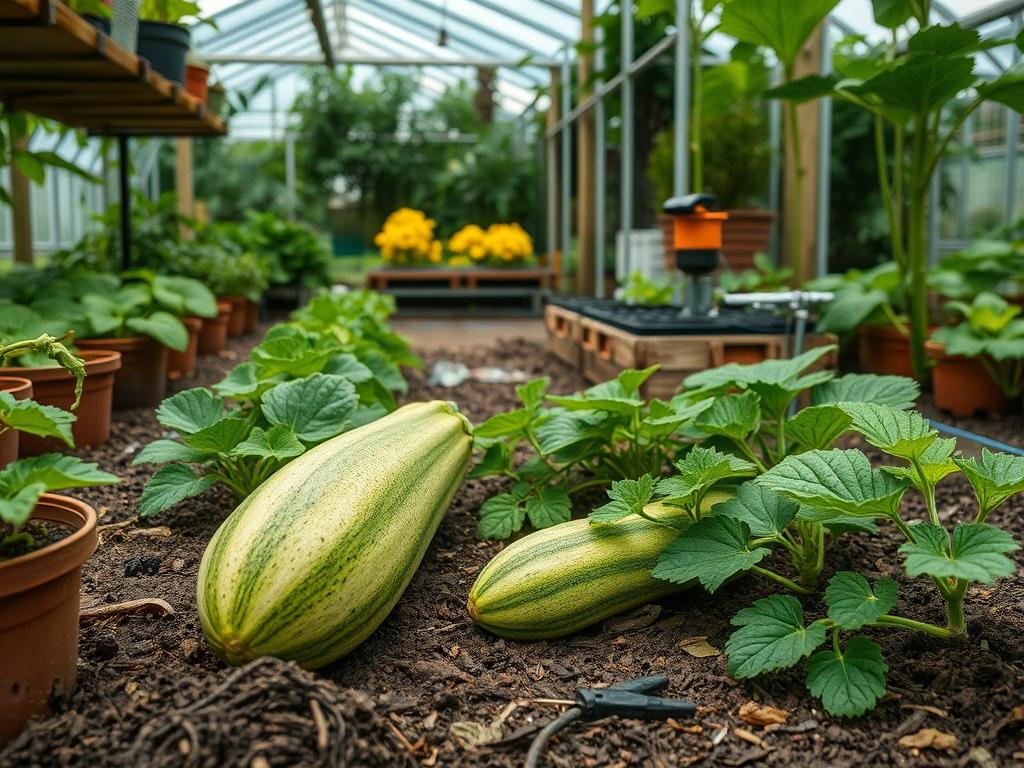
Integrating edible crops into a high end residential landscape requires a sophisticated balance between horticultural demand and aesthetic continuity. Small urban footprints often struggle with stagnating air and high humidity, which create the perfect breeding ground for fungal pathogens like Podosphaera xanthii. For the landscape architect, the challenge is to place Mildew Resistant Zucchini in a way that maximizes yield without compromising the visual harmony of the outdoor environment. We must treat the vegetable garden not as a hidden utility zone, but as a structural component of the softscape. This involves a deep understanding of site analysis, specifically looking at how solar orientation and wind patterns affect the microclimate of a confined backyard or courtyard.
When we design for small spaces, every square foot must perform multiple functions. A zucchini plant is an architectural powerhouse with its expansive, serrated foliage and vibrant blooms, yet its susceptibility to powdery mildew often relegates it to the fringe of the garden. By selecting Mildew Resistant Zucchini cultivars, we can confidently place these plants in prominent positions, knowing the foliage will remain a deep, healthy green throughout the peak of the summer season. This resistance is crucial for maintaining curb appeal. A plant covered in white, fuzzy fungal spores detracts from the clean lines of a modern landscape and can quickly signal a lack of maintenance to visitors or potential buyers.
Functionality in a small scale landscape also hinges on the concept of high performance zones. We look at drainage patterns and soil compaction during the initial site assessment to ensure that the moisture levels remain consistent but never excessive. Zucchini plants require significant water to support their rapid growth and high fruit water content, yet standing water at the base of the plant is a primary driver of root rot and secondary fungal infections. By incorporating raised masonry planters or subtle Grading adjustments, we can redirect runoff away from the crown while keeping the root zone hydrated through targeted subterranean systems.
Landscape Design Principles
Integrating Mildew Resistant Zucchini into a professional landscape plan relies heavily on the principle of airflow. In small gardens, air often becomes trapped by high fences, retaining walls, or dense perimeter hedging. To counteract this, designers must implement “Living Ventilation” corridors. This means spacing plants according to their mature spread, usually 36 inches to 48 inches apart, and using vertical elements to lift the canopy off the ground. By employing a vertical trellis or a single-stake training method, we change the elevation layer of the zucchini from a ground cover to a mid-level focal point. This transition opens up the ground plane for smaller ornamental companions while ensuring that wind can move freely through the zucchini leaves, drying out moisture before mildew can take hold.
Symmetry and visual balance are also vital when using edible plants in a formal or semi-formal landscape. Instead of a chaotic patch of squash, we might use Mildew Resistant Zucchini as a repeating anchor in a linear border. When paired with structured elements like Steel Edging or Boxwood hedging, the unruly nature of the zucchini is contained within a clear geometric frame. This juxtaposition between the organic, blowing leaves of the squash and the rigid lines of the hardscape creates a dynamic tension that defines modern landscape design. Furthermore, by planning for irrigation at the design phase, we can hide Drip Irrigation lines beneath a layer of high quality mulch, ensuring that water reaches the soil directly without wetting the foliage.
Plant and Material Selection
The following table outlines the essential components for a small scale, mildew resistant edible landscape. Choosing the right materials is just as important as selecting the plant species themselves.
| Plant or Material | Sun Exposure | Soil Needs | Water Demand | Growth Speed | Maintenance |
| :— | :— | :— | :— | :— | :— |
| Mildew Resistant Zucchini | Full Sun | Rich, Well-Drained | High | Fast | Moderate |
| French Marigolds | Full Sun | Any / Loamy | Moderate | Medium | Low |
| Hardwood Mulch | N/A | High Organic | N/A | N/A | Low |
| Drip Irrigation Kit | N/A | N/A | High Efficiency | N/A | Low |
| Vertical Trellis | N/A | N/A | N/A | N/A | Low |
| Organic Compost | N/A | Nutrient Dense | N/A | N/A | Moderate |
Implementation Strategy
The successful installation of a small space garden starts with precision Grading. Even in a small backyard, a 2 percent slope away from the home and toward a designated drainage area is standard practice. If the site is flat, we create artificial elevation using Retaining Walls or Raised Beds constructed from rot resistant materials like cedar or stone. Once the site is shaped, we focus on the soil profile. For Mildew Resistant Zucchini, the soil must be amended with Aged Compost to a depth of 12 inches; this ensures the intense nutritional demands of the plant are met throughout the season.
The layout should prioritize accessibility and airflow. We recommend a “Center-Out” planting strategy for small plots. Place the zucchini in the center or against a northern wall if using a vertical support system. Use a Post Hole Digger to install a sturdy 5 foot Stake at the time of planting. As the zucchini grows, use Soft Garden Ties to secure the main stem to the stake. This vertical growth habit exposes the underside of the leaves to the sun and air, which is the most effective cultural control for mildew. After planting, a 3 inch Layer of Hardwood Mulch or Pine Bark should be applied across the entire soil surface, leaving a small gap around the stem. This mulch regulates soil temperature and prevents soil-borne pathogens from splashing onto the leaves during rain events.
Common Landscaping Failures
One of the most frequent mistakes in small scale gardening is “Over-Planting” for immediate impact. Homeowners often install three or four zucchini plants in a space meant for one, leading to root overcrowding and a complete lack of air circulation. Within weeks, even a Mildew Resistant Zucchini will struggle because the sheer volume of overlapping foliage creates a stagnant, high humidity micro-environment. This failure can be avoided by strictly adhering to a site plan that honors the mature width of the species.
Another common failure involves the irrigation system. Manual overhead watering with a garden hose is a primary cause of powdery mildew. When water sits on the leaves overnight, it provides the moisture necessary for fungal spores to germinate. In professional installations, we always specify Drip Irrigation or Soaker Hoses on an automated timer. This ensures that the water is delivered to the root zone early in the morning, allowing any accidental splashes on the lower leaves to evaporate quickly as the sun rises. Finally, neglecting the drainage can lead to soil compaction, which prevents oxygen from reaching the roots, causing the plant to become stressed and more susceptible to disease regardless of its genetic resistance.
Seasonal Maintenance
Landscape management is a year round commitment that changes with the seasons. In the Spring, the focus is on soil preparation and installation. We test the soil pH, aiming for a range between 6.0 and 7.5. This is also the time to check the Irrigation Emitters for clogs and to refresh the mulch layers to suppress early weed growth. As we move into Summer, maintenance shifts to “Sanitary Pruning.” Even with Mildew Resistant Zucchini, it is wise to remove any older, yellowing leaves at the base of the plant using Bypass Pruners. This further improves air circulation and directs the plant’s energy toward fruit production.
When Autumn arrives, the priority is sanitation. Once the harvest ends, the entire plant should be removed from the site. Do not compost zucchini vines if they show any signs of disease; instead, dispose of them to prevent spores from overwintering in the soil. This is the time to add a fresh layer of Compost to the beds, allowing the nutrients to leach into the soil over the colder months. During the Winter, maintenance is minimal, focusing on the hardscape. We inspect Retaining Walls for shift due to freeze-thaw cycles and ensure that drainage outlets remain clear of debris. This proactive approach ensures the landscape is ready for a high performance replanting the following spring.
Professional Landscaping FAQ
Which zucchini varieties have the best mildew resistance for small gardens?
Varieties such as Dunja, Payload, and Zelinda are engineered for high resistance. These hybrids maintain clean foliage even in humid conditions, making them ideal for high density urban landscapes where airflow may be restricted by nearby structures or fences.
How can I save space when planting zucchini in a small backyard?
Utilize vertical gardening techniques by training the main stem up a Sturdy Stake or Trellis. Secure the plant every 6 inches as it grows. This reduces the ground footprint from 15 square feet to approximately 3 square feet.
Does mulch really help prevent powdery mildew on zucchini?
Yes, mulch acts as a physical barrier. It prevents soil-borne fungal spores from splashing onto the leaves during heavy rains. It also regulates soil moisture, reducing the physiological stress that often makes plants more vulnerable to powdery mildew infections.
What is the best irrigation method for mildew-prone areas?
A dedicated Drip Irrigation system is the professional standard. By delivering water directly to the soil at the base of the plant, you keep the foliage dry. This eliminates the moisture required for mildew spores to colonize the leaf surface.
Can I grow mildew resistant zucchini in large patio containers?
Absolutely. Select a container with at least a 5 gallon capacity and ensure it has excellent drainage holes. Use a high quality Soilless Potting Mix and provide a vertical support to keep the plant contained within the patio footprint.