
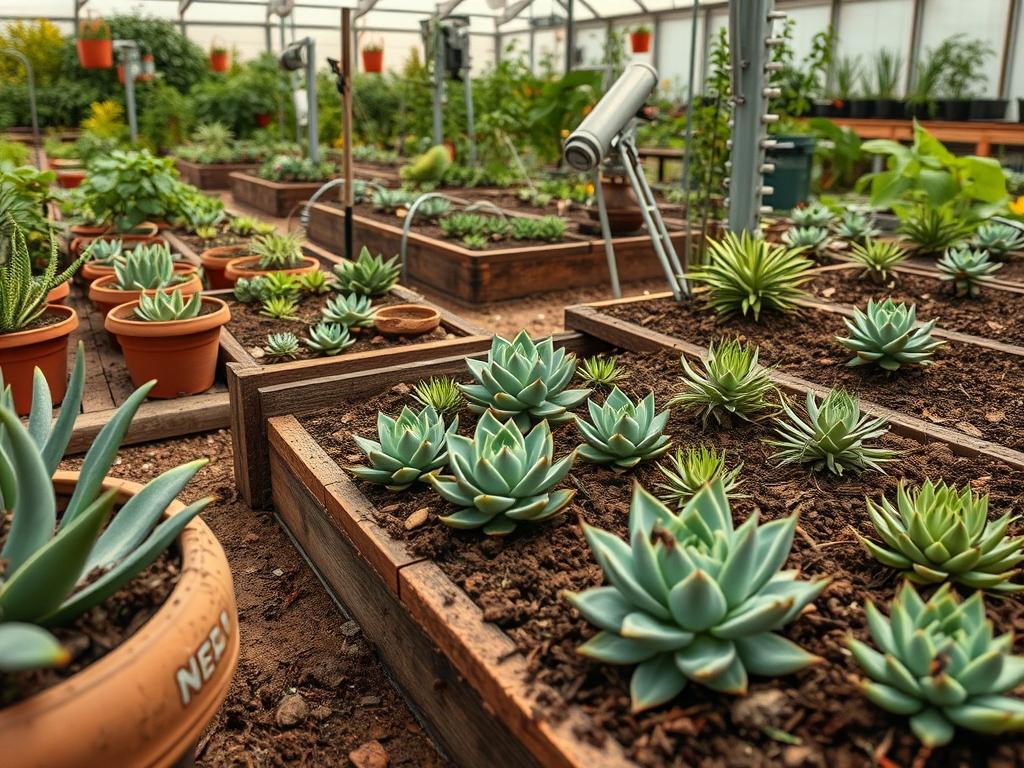
Establishing a high-end xeriscape or succulent garden requires more than a simple selection of attractive plants and a bag of decorative gravel. In the professional world of landscape architecture, we view these installations as living ecosystems where every element, from the alkalinity of the soil to the local insect populations, plays a role in the long term viability of the design. One of the most insidious threats to a pristine succulent installation is the presence of ants in succulent beds. While ants themselves do not typically consume plant tissue, their presence is often the primary indicator of a developing scale or mealybug infestation. These sap-sucking insects produce a sugary byproduct known as honeydew, which ants harvest as a primary food source. In exchange for this liquid gold, ants offer scale insects protection from natural predators like ladybugs and lacewings. This symbiotic relationship can lead to a rapid decline in plant health, compromising the curb appeal and the overall financial investment of the property owner.
For a landscape consultant, the goal is to create an outdoor environment that functions as an extension of the home while requiring minimal chemical intervention. When ants move into the sub-base of a succulent bed, they often displace the carefully curated soil structure, creating air pockets that can lead to uneven settling of heavy specimens. Furthermore, the resulting scale infestation causes yellowing, leaf drop, and a sticky residue that attracts black sooty mold. This mold obscures the vibrant colors and geometric patterns that make succulents so desirable in modern landscape design. To prevent these issues, one must integrate pest management directly into the initial design phase, ensuring that the environment is less hospitable to ants and more resilient to the pests they protect.
Landscape Design Principles
The foundation of a resilient succulent garden lies in the application of core design principles like symmetry, focal points, and elevation layers. When designing a bed, symmetry provides a sense of order and intentionality, but it also serves a practical purpose. A symmetrical layout allows a property owner to quickly identify deviations in plant health; if one side of a mirrored planting is thriving while the other shows signs of ant activity or scale, the problem can be addressed before it spreads. Focal points, such as a large Agave ovatifolia or a structural Dracaena draco, should be positioned in areas with the highest visibility and the best drainage. These anchor plants are often the first targets for scale insects, as their large surface areas provide ample feeding grounds.
Elevation layers are perhaps the most critical architectural tool for managing ants in succulent beds. By creating raised mounds or tiered retaining walls, we can control the moisture levels within the soil profile. Ants prefer stable, slightly moist environments for their colonies. By elevating the planting area using a drainage-oriented sub-grade, we ensure that the top layers of soil dry out quickly after irrigation. This makes the bed less attractive to nesting ants. Additionally, visual balance must be maintained by varyng the heights of the plants. Using Sedum as a groundcover around the base of mid-sized Aloe species creates a dense mat that can inhibit ant movement, provided the soil beneath remains well-drained.
Visual balance also involves the strategic use of hardscaping. The transition between a lush succulent bed and a functional walkway should be sharp and defined. This not only improves the aesthetic but also creates a physical barrier. Using poured concrete curbing or heavy-gauge steel edging can limit the entry points for foraging ants. When the irrigation planning is integrated into these elevation changes, using pressure-compensating drip emitters ensures that water is delivered precisely to the root zone without saturating the surrounding soil, further discouraging ant colonization.
Plant and Material Selection
| Plant Type | Sun Exposure | Soil Needs | Water Demand | Growth Speed | Maintenance Level |
| :— | :— | :— | :— | :— | :— |
| Agave attenuata | Full to Partial Sun | Sandy Loam | Very Low | Slow | Low |
| Echeveria ‘Afterglow’ | Full Sun | Gritty Mix | Moderate | Medium | Medium |
| Aloe ‘Blue Elf’ | Full Sun | Well Draining | Low | Fast | Low |
| Sedum rupestre | Full to Partial Sun | Rocky/Poor | Low | Fast | Low |
| Crassula ovata | Full Sun to Shade | Loamy/Sandy | Moderate | Medium | Medium |
| Senecio serpens | Full Sun | Porous Mix | Low | Fast | Low |
Implementation Strategy
The implementation of a professional-grade succulent bed begins with proper grading and site preparation. To ensure longevity, the site must be graded at a 1 percent to 2 percent slope away from any building foundations to prevent water pooling. Once the grade is established, the designer should focus on the soil composition. Standard garden soil is often too heavy and holds too much organic matter, which attracts ants and promotes fungal growth. Instead, a mixture of 60 percent inorganic material, such as pumice, perlite, or decomposed granite, and 40 percent organic matter should be used.
After the soil is prepared, the layout of the plants should follow the architectural plan, leaving at least 12 inches to 18 inches of space between larger specimens to allow for airflow and easy inspection. Once the plants are in the ground, a layer of landscape fabric is generally discouraged in succulent beds because it can trap moisture and provide a protected highway for ants beneath the surface. Instead, apply a 3-inch layer of inorganic mulch, such as crushed volcanic rock or pea gravel. This mulch serves as a thermal regulator and a deterrent for ants, as the sharp edges of certain stones can make traversing the bed difficult for small insects.
Proper edging is the final textural element of the implementation. Using natural stone boulders or 3/16-inch thick steel edging creates a clean line between the succulent bed and the surrounding lawn or path. This boundary is essential for Integrated Pest Management (IPM). If a lawn is adjacent to the succulent bed, the high water and nitrogen requirements of the grass will inevitably attract ants. A clear, dry border acts as a “no-man’s-land” that can be easily treated with boric acid bait stations or other non-invasive deterrents to keep ants from migrating into the succulent area.
Common Landscaping Failures
The most frequent failure in succulent landscaping is improper drainage. When water accumulates at the base of a plant, it softens the tissue, making it easier for scale insects to pierce the skin and feed. This excess moisture also signals a prime nesting location for ants. Another common mistake is root overcrowding. When plants are spaced too closely, it creates a humid microclimate that shields scale insects from both the wind and the sun. This lack of circulation allows a small pest problem to become a full-blown infestation in a matter of weeks.
Soil compaction is another silent killer of high-end landscapes. Over time, foot traffic or the natural weight of the soil can collapse the macropores that allow roots to breathe. Compacted soil retains water longer and prevents deep root penetration, stressing the succulent. Stressed plants emit chemical signals that actually attract pests, including the ants that facilitate scale growth. Finally, irrigation inefficiencies, such as using overhead sprayers instead of sub-surface drip lines, can lead to water sitting in the crowns of plants like Echeveria, which can cause rot and provide a drinking source for ant colonies.
Seasonal Maintenance
Seasonal maintenance is the hallmark of a professional landscape management plan. In the spring, the focus should be on prevention. This is the time to clear away any leaf litter that has accumulated during the winter. Dead leaves at the base of an Aloe are the primary hiding spots for both ants and scale insects. Applying a preventative dose of neem oil or a specialized horticultural oil can smother any overwintering pests before the heat of summer arrives.
During the summer months, monitoring is prioritized. High temperatures can stress succulents, making them vulnerable. Check the undersides of leaves and the central growing points for any white, cottony masses or hard, shell-like bumps, which are indications of scale. If ants are seen traveling in a distinct line up the stem of a plant, they are likely tending to a hidden scale colony. Autumn is the season for structural adjustments. If a plant has grown too large for its space, it should be pruned or thinned to restore airflow. Finally, in winter, irrigation should be reduced to a minimum. Most succulents enter a dormant or semi-dormant state and require very little water. Keeping the soil dry during this period is the most effective way to collapse any existing ant colonies and ensure the bed remains healthy for the following year.
Professional Landscaping FAQ
How do ants specifically cause scale problems in succulents?
Ants protect scale insects from natural predators like ladybugs. They do this to harvest honeydew, a sugary liquid the scale produces. This protection allows scale populations to grow unchecked, quickly damaging the architectural beauty of your succulent beds.
What is the best mulch to prevent ants in succulent beds?
Inorganic mulches like crushed glass, lava rock, or decomposed granite are superior. Unlike wood mulch, these materials do not decompose or retain excessive moisture, making the environment much less attractive for ant nesting and scale development.
Can I use professional pesticides on my succulents?
While possible, it is better to use systemic insecticides for scale or boric acid baits for ants. Always test a small area first, as the waxy coating on many succulents can be sensitive to certain chemical sprays and oils.
How often should I irrigate to avoid attracting pests?
Irrigation frequency depends on climate, but the gold standard is the soak and dry method. Only apply water when the top 2 inches of soil are completely dry. This prevents the damp conditions that ants and scale prefer.
Why is drainage so important for pest control?
Poor drainage leads to high humidity and soft plant tissue. Ants thrive in damp soil, and scale insects find it easier to feed on water-bloated succulents. Proper drainage, achieved through grading and porous soil, is your first line of defense.