
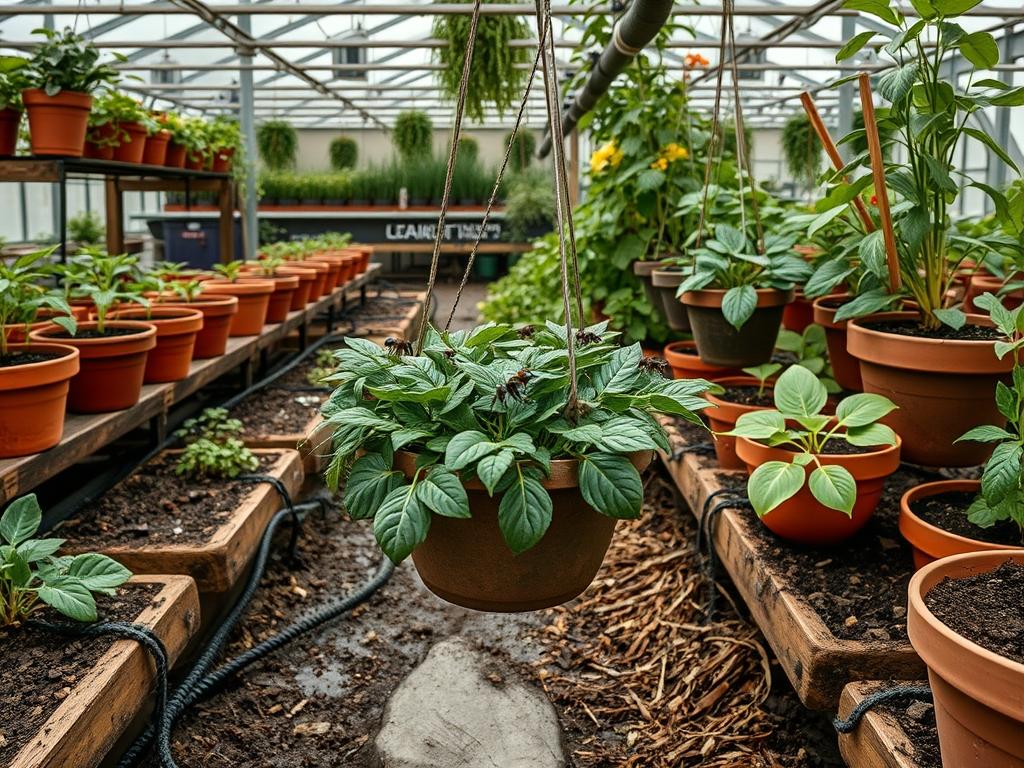
The integration of vertical interest through elevated containers is a cornerstone of modern residential landscape design. While traditional garden beds anchor the property, hanging baskets function as the punctuation marks of an outdoor environment, providing essential color at eye level and softening the hard lines of eaves, pergolas, and entryway overhangs. However, these architectural accents face unique environmental stressors that ground-level plantings do not. The combination of wind exposure, limited soil volume, and rapid evaporation creates a micro-climate that is often hostile to plant health. One of the most persistent challenges for any landscape professional managing these installations is the presence of ants in hanging baskets, which typically signals an underlying issue with soil moisture or pest infestation. When a basket begins drying out too rapidly, it creates a void in the landscape’s visual cohesion, turning a vibrant focal point into a neglected liability that detracts from the overall curb appeal.
Successful container gardening within a larger landscape plan requires a deep understanding of hydrological balance and site-specific conditions. In high-traffic areas or formal entryways, the functionality of the goal is to maintain a lush, continuous bloom that greets visitors. When baskets are ignored, they become prone to hydrophobicity, where the potting medium shrinks away from the container edges, allowing water to bypass the root ball entirely. This lack of moisture creates a dry, protected sanctuary for colonies. Ants in hanging baskets are rarely there by accident; they are frequently tending to sap-sucking insects like aphids or mealybugs, which produce a sticky substance known as honeydew. Addressing the ant problem is not just about pest control. It is about restoring the environmental integrity of the planting through proper saturation techniques and structural adjustments.
Landscape Design Principles
In the realm of landscape architecture, the placement of hanging baskets must adhere to the principles of symmetry and focal intensity. When designing a front porch or a backyard retreat, we often use paired containers to flank a doorway, creating a sense of formal balance. This symmetry directs the eye toward the primary entrance, enhancing the home’s structural rhythm. If one basket in a pair suffers from drought stress or ant activity, the visual balance is shattered. Therefore, a designer must consider the elevation layers of the garden. We treat hanging baskets as the “canopy” layer of a container garden, complementing mid-level planters and ground-level bordering.
Irrigation planning is perhaps the most critical design principle for elevated assets. For high-end residential projects, we recommend the installation of discrete 1/4-inch micro-drip emitters routed through the hanging hardware. This ensures consistent moisture without the need for manual labor, which is the primary reason most baskets fail. Visual balance also dictates the scale of the basket. A small 10-inch basket on a massive wrap-around porch will look undersized, while an oversized 24-inch wire basket can overwhelm a narrow walkway. Designing with maintenance in mind means selecting the right hooks and brackets; substantial heavy-duty wrought iron hangers are necessary to support the weight of wet soil and mature plant mass.
Plant and Material Selection
Selecting the right biological components is vital for ensuring longevity. In areas prone to high heat where drying out is a constant threat, choosing drought-tolerant species or those with high water-retention capabilities is a strategic necessity.
| Plant Type | Sun Exposure | Soil Needs | Water Demand | Growth Speed | Maintenance Level |
| :— | :— | :— | :— | :— | :— |
| Trailing Pelargonium | Full Sun | Well-drained | Moderate | Fast | Low |
| Fuchsia hybrids | Part Shade | Rich, organic | High | Medium | Medium |
| Silver Falls Dichondra | Full Sun | Gritty, loose | Low | Very Fast | Low |
| Scaevola (Fan Flower) | Full Sun | Peat-based | Medium | Moderate | Low |
| Petunia x hybrida | Full Sun | High nutrient | High | Fast | High |
| Begonia boliviensis | Shade/Part Sun | Airy, porous | Moderate | Medium | Medium |
Beyond the plants, the material used for the liner significantly affects moisture retention. Coconut coir liners are aesthetically pleasing but highly porous, often leading to the rapid drying out of the root zone. To mitigate this, many landscape architects specify the use of a hidden plastic reservoir or a layer of sphagnum moss to help retain water. Polymer moisture crystals can also be incorporated into the potting mix to act as miniature underground reservoirs, releasing water as the soil temperature rises.
Implementation Strategy
The successful implementation of a hanging basket program begins with the physical installation of the hardware. For masonry walls, use lead anchors; for wooden eaves, ensure the lag screws are driven directly into the structural rafters rather than the decorative soffit. Once the hangers are secure, the focus shifts to the soil architecture. We start by lining the basket with a thick layer of pre-moistened coconut coir. To prevent the soil from drying out too quickly, place a small plastic saucer or a circle cut from a heavy-duty trash bag at the bottom of the liner to trap a small amount of water.
Fill the container with a high-quality soilless potting mix containing perlite and vermiculite. Avoid using standard garden soil, as it is too heavy and will compact over time, leading to drainage failure. As you plant, ensure the root balls are slightly below the rim of the basket to create a “reservoir space” for watering. If ants are a known issue in the area, apply a thin layer of diatomaceous earth around the base of the hanger or treat the hanging wire with a sticky barrier resin to prevent scouts from reaching the foliage. Finalize the installation with a 1-inch layer of decorative mulch or moss on the surface to reflect heat and lock in moisture.
Common Landscaping Failures
The most common failure in container management is the “death by a thousand drips” or, more accurately, the lack of them. When a basket dries out completely, the soil becomes hydrophobic. Many homeowners see water running out of the bottom of the basket and assume it is saturated, when in fact the water is simply sliding down the gap between the dried soil and the liner. This leaves the interior of the root ball bone-dry, creating a perfect environment for ants to build nests in the airy, protected center.
Another frequent mistake is root overcrowding. Designing a “thriller, filler, and spiller” combination is excellent for immediate visual impact, but if the plants are packed too tightly, they will compete for limited resources, leading to stunted growth and increased susceptibility to pests. Furthermore, poor drainage can be just as deadly as drought. If a basket lacks sufficient exit points for excess water, the soil will become anaerobic, rotting the roots and inviting fungus gnats. Finally, ignoring the structural limits of the mounting surface can lead to property damage; a fully saturated 16-inch basket can weigh upwards of 30 pounds, easily pulling down a weak fascia board.
Seasonal Maintenance
Landscape management shifts with the transition of the sun. In the spring, the focus is on establishment. This is the period to integrate slow-release granular fertilizers (such as a 14-14-14 NPK ratio) into the soil. As we move into the peak of summer, the primary task is hydration. Baskets may require watering twice daily during heatwaves. If you detect ants in hanging baskets during July or August, inspect the undersides of leaves for aphids. A blast of water from a pressure sprayer can dislodge these pests, while a neem oil application provides a longer-term organic solution.
Autumn requires a reduction in nitrogen-heavy feeding as plant growth slows. This is the time to deadhead aggressively to maintain the aesthetic. For perennial baskets in temperate zones, transition them to a sheltered area before the first hard frost. In winter, the maintenance is largely structural. Remove old annuals, compost the spent soil, and clean the containers with a 10 percent bleach solution to kill any lingering pathogens or insect eggs. Inspect the mounting brackets for rust or loosening, ensuring the hardware is ready for the weight of the new season’s growth.
Professional Landscaping FAQ
How can I tell if ants are damaging my hanging plants?
Ants don’t usually eat the plants, but they protect pests like aphids and create air pockets in the soil. These pockets dry out the roots, leading to wilting and nutrient deficiencies despite regular watering schedules and fertilization efforts.
What is the best way to rehydrate a bone-dry basket?
Submerge the entire lower half of the basket in a large bucket of water for 20 to 30 minutes. This forces the hydrophobic soil to reabsorb moisture from the inside out, which is far more effective than top-watering dried media.
Can I use native plants in hanging baskets?
Yes, many native species like Wild Strawberry or certain trailing Sedums work beautifully. Natives are often more resilient to local temperature swings, though they still require more frequent water than they would if planted in the ground.
How do I prevent ants from climbing up to my baskets?
Apply a small amount of petroleum jelly or a commercial insect barrier glue to the hook or the vertical hanging wire. Since ants cannot cross this sticky barrier, they remain on the ground and away from your elevated foliage.
What is the ideal mulch for a hanging container?
Use shredded cedar mulch or preserved sheet moss. These materials are lightweight, provide excellent thermal insulation for the top of the root ball, and help prevent the “crusting” of the soil surface that often leads to water runoff issues.