
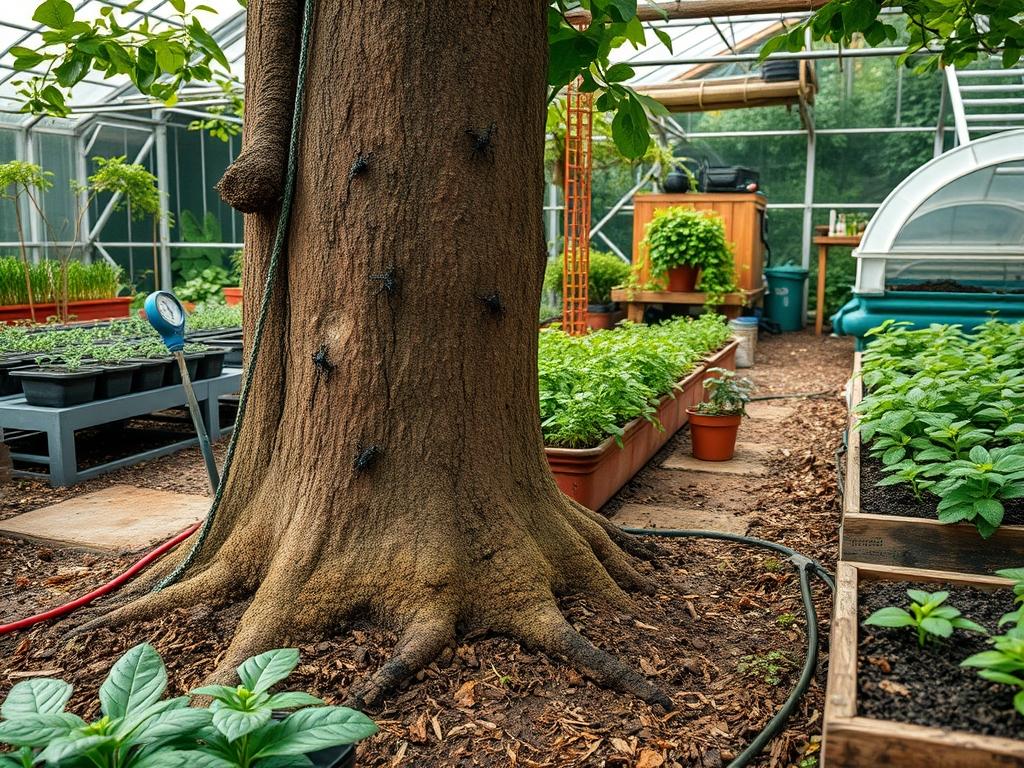
A healthy landscape relies on the structural integrity of its tallest assets. When a homeowner or property manager notices Ants in Tree Trunks, it often signifies more than a simple insect infestation. In the world of high-end landscape architecture, these insects serve as biological indicators of internal wood decay. Trees are the primary anchors of outdoor living spaces, providing shade, privacy, and architectural scale. When their internal health is compromised by fungi, moisture, or poor pruning practices, the resulting soft wood becomes the perfect nesting ground for Carpenter Ants. Addressing this early is vital for preserving the curb appeal and safety of the property. Neglecting the presence of these insects can lead to sudden branch failure or total tree collapse, which poses a significant risk to nearby structures and the overall functionality of the garden.
The presence of Ants in Tree Trunks is usually a secondary symptom of an underlying moisture problem. These insects do not eat wood like termites; instead, they excavate galleries within softened, decaying timber to create nests. From a landscape design perspective, a tree housing a colony is a red flag for structural instability. As a professional consultant, I evaluate these occurrences within the context of the broader environment. We must consider how the climate, particularly high humidity or poor soil drainage, contributes to the heartwood rot that attracts these pests. A well-designed landscape should prioritize the longevity of its canopy. If the central focal point of a backyard is a centuries-old Oak or Maple showing signs of infestation, the entire design strategy may need to shift toward tree preservation or strategic removal and replacement.
Landscape Design Principles
Successful landscape design balances aesthetics with biological reality. One of the most critical principles is the use of focal points. A majestic tree often serves as the “anchor” of a garden, drawing the eye and providing a sense of permanence. However, when Ants in Tree Trunks appear, that focal point becomes a liability. Designers must assess whether the tree can be saved through professional arboriculture or if it disrupts the symmetry of the space. Symmetry provides a sense of order and tranquility, often achieved through paired plantings or balanced masses on either side of a central axis. If one tree in a symmetrical pair begins to decay, the visual balance of the entire estate is compromised.
Elevation layers are another essential element in professional gardening. We design in three dimensions: ground cover, the understory, and the canopy. The canopy layer is responsible for the “ceiling” of the outdoor room. If the canopy is failing due to internal rot, the understory plants may suddenly be exposed to excessive sunlight, leading to leaf scorch. Furthermore, irrigation planning must be handled with precision. Over-irrigation is a leading cause of the root rot and trunk decay that eventually attracts ants. By using Smart Irrigation Controllers and Drip Emitters, we ensure that water is delivered to the root zone without saturating the trunk flare, which is a common entry point for decay-causing pathogens.
Visual balance also extends to the relationship between hardscaping and softscaping. A heavy Stone Retaining Wall built too close to a tree can compress the soil, suffocating roots and leading to the very decay that invites Ants in Tree Trunks. Professional planning ensures that “Critical Root Zones” are respected. By maintaining proper distances and using breathable materials like Decomposed Granite or Permeable Pavers, we protect the structural health of the trees that define the outdoor environment.
Plant and Material Selection
Selecting the right plant for the right place is the foundation of a resilient landscape. The following table outlines various species and materials used to create a balanced, low-maintenance environment that discourages the conditions leading to tree decay.
| Plant Type | Sun Exposure | Soil Needs | Water Demand | Growth Speed | Maintenance Level |
| :— | :— | :— | :— | :— | :— |
| White Oak | Full Sun | Well-drained | Moderate | Slow | Low |
| River Birch | Full/Partial | Moist/Acidic | High | Fast | Medium |
| Japanese Maple | Partial Shade | Loamy/Rich | Moderate | Slow | Medium |
| Switchgrass | Full Sun | Any/Sandy | Low | Fast | Low |
| Boxwood | Full/Partial | Well-drained | Moderate | Medium | High (Pruning) |
| Azalea | Partial Shade | Acidic/Peaty | Moderate | Medium | Medium |
| River Rock | N/A (Mulch) | Drainage | N/A | N/A | Low |
| Cast Iron Plant | Full Shade | Well-drained | Low | Slow | Low |
Implementation Strategy
The implementation of a high-end landscape requires a methodical approach to ensure both beauty and structural health. The first step is always a thorough site analysis, which includes testing the soil pH and checking for existing pest issues like Ants in Tree Trunks.
Once the assessment is complete, the grading process begins. Proper grading ensures that water flows away from the foundations of both the home and the primary trees. We utilize Transit Levels to establish a minimum 2 percent slope. After grading, we install the “bones” of the garden, which include Retaining Walls, Walkways, and French Drains. In areas where trees are the priority, we may use Air Spades to excavate without damaging sensitive root systems.
The next phase is edging and bed preparation. Using 14-gauge Steel Edging provides a clean, permanent line between turf and planting beds. This prevents grass from encroaching on tree bases, which often leads to “mower blight” or physical damage to the bark. Such wounds are the primary entry points for the fungi that create the hollows where ants eventually nest. Finally, we apply mulch. A 3-inch layer of Premium Hardwood Mulch is ideal, but it must be kept away from the trunk flare. We call this “donut mulching” rather than “volcano mulching.” Keeping the trunk dry is the best defense against the structural decay that signals an invitation to wood-boring insects.
Common Landscaping Failures
The most frequent failure in residential landscapes is improper drainage. When water pools at the base of a tree, it softens the bark and promotes fungal growth. This creates the exact environment needed for Ants in Tree Trunks to establish a colony. Many homeowners mistakenly believe the ants are the primary problem, but the real issue is the moisture-induced rot.
Another common mistake is root overcrowding. Planting too many large species in a confined space leads to competition for nutrients and water. This stress weakens the trees, making them susceptible to heartwood decay. Furthermore, soil compaction is a silent killer. Heavy machinery used during construction often packs the soil so tightly that oxygen cannot reach the roots. A suffocated root system leads to dieback in the upper canopy, and as those branches rot, the decay travels down into the main trunk.
Improper irrigation timing also contributes to landscape failure. Watering in the late evening keeps the foliage and trunks wet overnight, which is a catalyst for fungal infections. We recommend early morning irrigation to allow the midday sun to dry the bark. Lastly, poor pruning, such as “topping” trees, leaves large, open wounds that rarely heal properly. These wounds become conduits for water and pests, eventually hollowing out the tree from the inside out.
Seasonal Maintenance
Seasonal care is what separates a fading garden from a thriving estate. In the Spring, the focus is on inspection and fertilization. This is the best time to look for sawdust-like material, known as Frass, at the base of trees, which is a telltale sign of Ants in Tree Trunks. We apply a slow-release, granular fertilizer to support new growth.
During the Summer, the priority shifts to water management. As temperatures rise, we adjust irrigation schedules to ensure deep watering. We use Tensiometers to monitor soil moisture levels, ensuring we provide enough hydration without over-saturating the root flare.
In Autumn, we focus on sanitation. Removing fallen leaves and debris prevents pests from overwintering near the base of sensitive plants. This is also the ideal time for structural pruning. By removing dead or crossing branches when the tree is entering dormancy, we minimize the risk of infection.
Finally, Winter is the season for “dormant oil” applications and hardscape repairs. We check for any structural shifting in Stone Walls caused by frost heave. It is also the best time to remove any trees that were deemed hazardous during the summer inspection. Removing a structural liability in winter prevents damage from heavy snow loads or ice storms.
Professional Landscaping FAQ
Why are ants suddenly appearing in my mature oak tree?
Ants are likely nesting in wood that has already been softened by moisture or fungi. They do not cause the initial damage, but their presence confirms that the tree has internal structural decay that requires a professional arborist’s assessment.
Can I save a tree that has ants in the trunk?
Yes, if the decay is localized. A professional can often improve the environment by fixing drainage and applying targeted treatments. However, if the structural heartwood is significantly compromised, removal may be necessary to ensure safety and maintain the landscape design.
What is the best way to prevent trunk rot?
Avoid wounding the bark with lawnmowers or weed trimmers. Ensure the trunk flare is visible and not buried under soil or mulch. Proper irrigation that keeps the trunk dry is also essential for preventing the fungal growth that attracts ants.
How does mulch influence tree health and pest activity?
Mulch retains moisture and regulates soil temperature, which is beneficial. However, piling mulch against the bark, known as volcano mulching, traps moisture against the trunk. This leads to rot, bark sloughing, and eventually, infestations of wood-nesting insects like ants.
Are all ants in a garden a sign of a problem?
No, most garden ants are beneficial, aerating the soil and controlling other pests. Only when you see consistent activity or piles of wood shavings on the trunk should you worry about structural integrity and the health of your vertical landscape elements.